
If your Sub-Zero lives in a floating home on Richardson Bay, it does not get serviced the way a hillside built-in does. Three faults — a salt-loaded condenser, a hardened gasket, and a slow drain — drive most calls from the 94965 docks, where no driveway reaches the door, the galley is compact, and the salt air never really leaves. We handle those calls the way the docks require: on foot, with a cart, and with the parts a unit over the water tends to need.
This page is for the households along Gate 5, Gate 6, Liberty Dock, Issaquah, and the Yellow Ferry docks in 94965. Whether your built-in is warming up, pooling water, or just running louder than it used to, here is how dock-access Sub-Zero service actually works out here, and what we look at first.
Why Floating-Home Sub-Zeros Age Differently
A Sub-Zero on the water lives in a harsher climate than one a mile inland, even though it sits in the same town. The air off Richardson Bay carries a fine salt aerosol year-round, and that film settles on the condenser, the fan blades, and every exposed metal edge inside the machine compartment. Over a few seasons it insulates the coil and makes the compressor work harder to shed heat.
Add the damp marine layer that hangs over the docks most mornings, and you get heavier frost loads on the evaporator and slower drain evaporation. None of this means your unit is failing early by design. It means a floating-home Sub-Zero needs its condenser cleaned more often and its seals checked sooner than an inland schedule assumes.
Dock-Cart Access to Gate 5, Liberty Dock, and Yellow Ferry
The first thing that changes on a dock call is how the tools arrive. We park at the head of your gate, load a flat dock cart, and walk in, because a service van cannot follow you down a finger pier. That shapes the whole visit: we bring the meters, the coil brushes, a shop vacuum, and the common drain, gasket, and fan parts in one trip so nobody is hiking back for a forgotten tool.
Every dock has its own quirks. Some gangways are steep at low tide, a few slips sit past a shared walkway, and parking near Gate 5 and Gate 6 fills early. If you give us your dock, slip number, and any locked gate code when you book, we plan the cart route before we arrive and keep the appointment on schedule.
The Faults We See Most on the Water
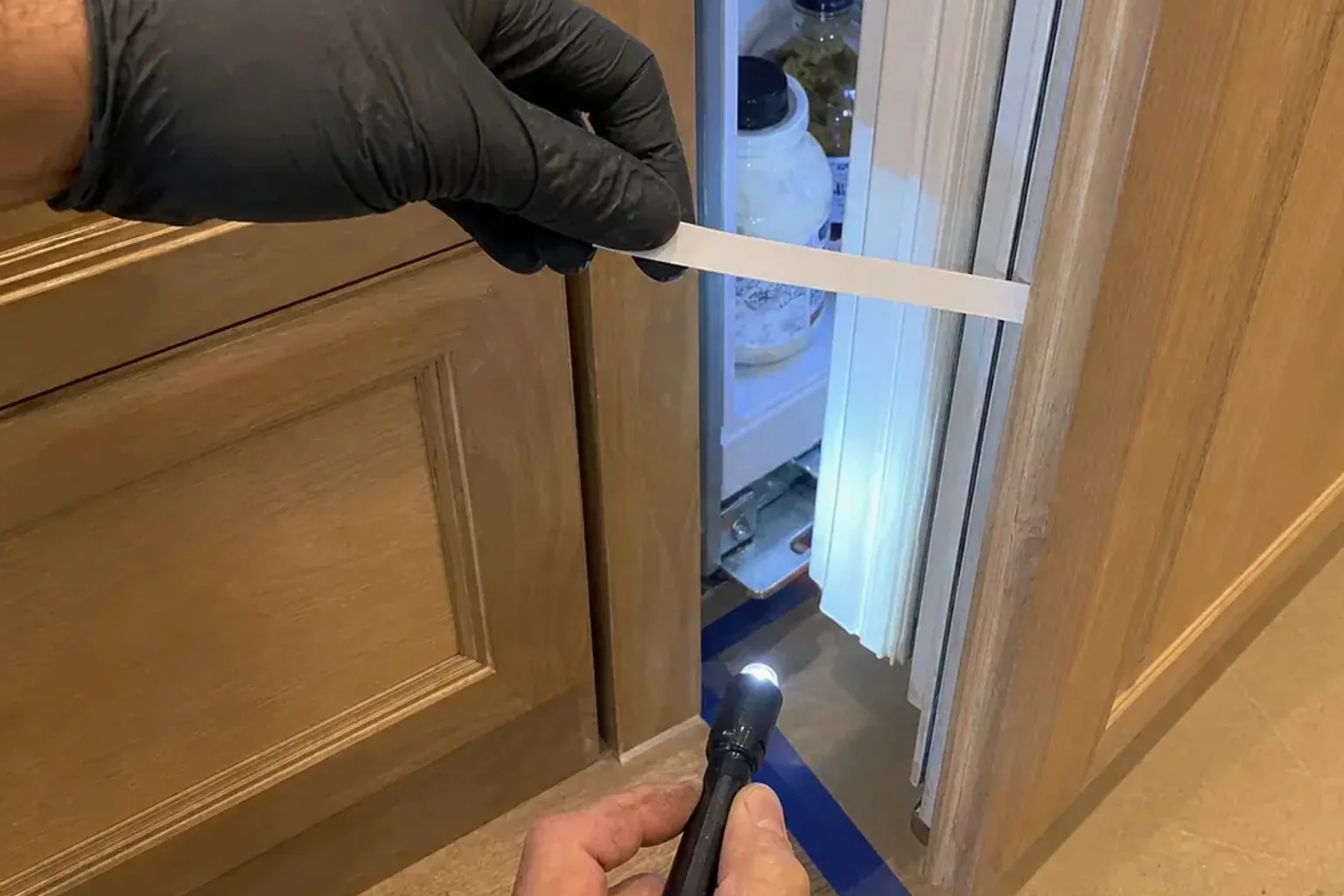
Three problems account for most floating-home calls. The first is a salt-loaded condenser that has lost its ability to cool, which shows up as a fridge that drifts warm, a compartment that will not hold temperature on a mild afternoon, or a unit that runs almost nonstop. The second is a tired door gasket, since salt and constant humidity harden the rubber and break the seal, letting damp air sweat inside the box.
The third is a slow drain. Marine grit and a little algae plug the narrow defrost line, and the melt water ends up in the pan or on the galley floor. Because these three faults feed each other, we check all of them on the first visit rather than fixing one and leaving the others to bring you a second problem. A yearly drain flush and coil clean is cheap insurance against a puddle that reaches the sole of a galley you cannot easily dry out.
Compact Galley Built-Ins and Panel-Ready Fronts
Floating-home kitchens are tight, and many of them run panel-ready or integrated Sub-Zero columns that wear a custom wood front to match the cabinetry. Pulling one of those units for service is a careful job in a narrow galley, where there is rarely room to swing the door fully or set parts on a counter. We protect the cabinet panel, the sole, and the flooring before anything moves.
Weight matters too. A built-in column is heavy, and a floating home flexes, so we brace and walk the unit rather than drag it. Most condenser cleaning, gasket work, drain flushing, and fan or control repairs happen with the unit only partly out, which keeps the visit shorter and safer in a small space over the water.
Salt-Air and the Condenser: The Slow Killer
If there is one part to stay ahead of on a floating home, it is the condenser. Inland, a Sub-Zero coil wants cleaning a couple of times a year, but on the docks the salt film builds faster and the payoff for a clean coil is bigger. A choked condenser is the root cause behind a surprising share of the warm-fridge calls we get from the waterfront.
When we clean one, we vacuum and brush the coil, clear the fan of salt crust, wipe down the compartment, and check that the fan spins freely and quietly. We also look for early corrosion on connectors and mounts, because catching a rusting terminal now is far cheaper than chasing an intermittent fault later. A few extra minutes on the coil often buys years on the compressor, which is the most expensive part in the machine.
Scheduling Around Tides and Dock Access
Booking a dock call takes a little more detail than a street address. We ask for your dock and slip, a gate code if there is one, and a heads-up if your gangway gets steep or slick at low tide, so we can time the cart run and bring an extra hand if the load is heavy. Weekday mornings before the fog burns off are usually the easiest windows on the water.
We come ready to finish in one trip. The cart carries diagnostic meters, coil-cleaning gear, a vacuum, and the drain, gasket, fan, and control parts that fit the common built-in and integrated columns. If a unit needs a part we do not stock, we secure the food, give you a clear quote, and set a firm return so you are not left guessing.
Independent Sub-Zero Service on the Sausalito Waterfront
We are an independent appliance repair company, not affiliated with Sub-Zero or Wolf, and we work only on the machines you already own. That independence lets us focus on the fix your unit actually needs, whether it is a coil cleaning, a fresh gasket, a cleared drain, or a fan and control repair, rather than steering you toward a replacement.
Along with the Richardson Bay docks, we serve Old Town, the Marinship, and the hillside homes above the harbor, all in and around 94965. If your floating-home Sub-Zero is warming up, sweating, pooling water, or simply running louder than it should, a dock-access visit sorts out the cause and gets it cold again. We will also tell you plainly whether the unit is worth repairing or nearing the end of its service life.